
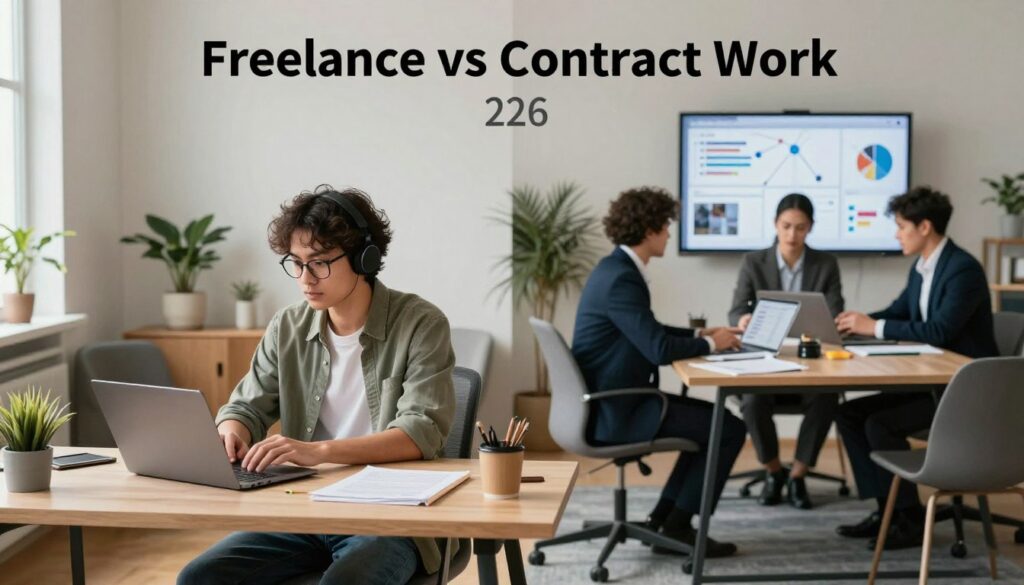
Introduction
The modern American workforce is shifting rapidly as more professionals seek autonomy. Choosing between independent projects and traditional employment requires a clear understanding of your financial future. Did you know that independent workers pay 15.3% in self-employment tax, while W-2 employees pay only 7.65% because their employer covers the rest?

Navigating the gig economy involves weighing tax burdens against the freedom to set your own rates. Many professionals now prefer the flexibility of independent career paths over standard office roles. Understanding these distinct work arrangements is essential for your long-term success in 2026.
This guide explores the critical distinctions between these two professional paths. We will examine how tax obligations, benefits, and job security differ for each group. Making an informed choice today will help you build a more stable and profitable career.
Key Takeaways
- Independent workers are responsible for the full 15.3% self-employment tax.
- W-2 employees benefit from employer-subsidized tax contributions and potential health benefits.
- Half of Gen Z workers are now choosing independent career paths for greater flexibility.
- Business expense deductions are a primary financial advantage for those working independently.
- Understanding your tax status is vital for effective financial planning in the current economy.
Defining the Modern Independent Workforce
The rise of the gig economy has led to a surge in independent workers, including freelancers and contract workers, each with distinct characteristics. As the modern workforce continues to evolve, understanding the definitions and nuances of these roles is essential for both professionals and businesses.
According to a report by Upwork, an online platform that connects freelancers with businesses, the number of freelancers in the United States has been steadily increasing, with a significant portion of the workforce expected to be freelancing by 2026. “The freelance workforce is driving innovation and growth in the US economy,” notes the report.
The Evolution of Freelancing in 2026
Freelancing has evolved significantly over the years, transforming from a niche profession to a mainstream career choice. The proliferation of digital platforms and the increasing demand for flexible, skilled labor have contributed to this shift. Freelancers now work across various industries, from creative fields to technical and professional services.
A key characteristic of freelancing is the autonomy it offers. Freelancers have the freedom to choose their projects, set their rates, and work with multiple clients simultaneously. This flexibility is a significant draw for many professionals seeking a better work-life balance or looking to diversify their income streams.
Understanding the Contract Worker Model
In contrast to freelancing, contract work typically involves a more structured arrangement between the worker and the employer. Contract workers are often hired for a specific period or project, and their terms of employment are outlined in a contract. This arrangement can provide stability and clarity for both parties.
Contract workers may work on-site or remotely, depending on the nature of the job and the agreement with the employer. While they may not have the same level of autonomy as freelancers, contract workers often have access to benefits and job security that freelancers do not.
“The distinction between freelancers and contract workers lies in their employment status, work arrangements, and the level of control they have over their work.”
Understanding these differences is crucial for professionals navigating the modern workforce and for businesses looking to engage with independent workers effectively.
Core Differences in Employment Status
Understanding the employment status of freelancers and contract workers is crucial for navigating the gig economy. The distinction between these two categories is not merely semantic; it has significant implications for their rights, responsibilities, and benefits.
Self-Employed Freelancers vs Independent Contractors
Freelancers are typically considered self-employed individuals who offer their services on a project-by-project basis. They often work with multiple clients simultaneously and are responsible for their own benefits, taxes, and work schedules. In contrast, independent contractors are usually hired for a specific project or period and may work exclusively for one client during that time.
A key difference between the two lies in their level of autonomy and control over their work. Freelancers generally have more flexibility in choosing their projects, setting their rates, and deciding their workflow. Independent contractors, while also having some autonomy, often work under more structured agreements that outline the scope, timeline, and compensation for their work.
Legal Classifications and Regulatory Compliance
The legal classification of freelancers and contract workers is critical for determining their employment rights and obligations. In the United States, the distinction between employees and independent contractors is often determined by the Internal Revenue Service (IRS) using factors such as behavioral control, financial control, and the type of relationship.
| Criteria | Freelancers | Independent Contractors |
|---|---|---|
| Behavioral Control | High degree of control over work | Some control, but may be subject to client direction |
| Financial Control | Responsible for their own expenses | May be reimbursed for expenses or have expenses covered by the client |
| Type of Relationship | Project-based, often with multiple clients | May be project-based or have a longer-term agreement with a single client |
Regulatory compliance is also a significant concern for both freelancers and contract workers. Misclassification can result in severe penalties, including back taxes, fines, and lawsuits. It is essential for both parties to understand the legal implications of their working arrangement.
Autonomy and Control in Professional Relationships
Autonomy and control are pivotal factors that differentiate freelancers from contract workers in the modern workforce. The level of independence and decision-making authority significantly influences their professional experiences and outcomes.
Freedom to Set Rates and Choose Tools
Freelancers typically enjoy a high degree of autonomy, allowing them to set their rates based on their expertise, demand, and the value they bring to clients. This flexibility is a significant freelance advantage, enabling them to adjust their pricing strategies according to market conditions.
Moreover, freelancers have the freedom to choose their tools and methodologies, which can enhance their productivity and efficiency. This autonomy in selecting the best tools for their work is crucial in maintaining high-quality output and staying competitive in the freelance job market.
Structured Expectations for Contract Workers
In contrast, contract workers often operate within more structured frameworks. Their rates are frequently predetermined by the contract agreement, and they may have limited flexibility to negotiate changes. This structured approach can provide contract benefits, such as predictable income and clearer expectations.
Contract workers are also expected to adhere to the tools and processes specified by the client or contracting organization. While this may limit their autonomy, it ensures consistency and reliability in the delivery of services.
| Aspect | Freelancers | Contract Workers |
|---|---|---|
| Rate Setting | Flexible, based on expertise and demand | Predetermined by contract agreement |
| Tool Selection | Autonomous choice based on preference and efficiency | Limited to tools specified by the client |
| Work Structure | Flexible, project-based | Structured, often with specific deliverables and timelines |
Analyzing the Freelance vs Contract Financial Landscape
Freelancers and contract workers face distinct financial landscapes that significantly impact their career choices and stability. The financial dynamics at play involve various factors, including income stability, payment structures, and overhead costs. Understanding these elements is crucial for professionals deciding between freelancing and contract work.
Income Stability and Payment Structures
One of the primary financial considerations for freelancers and contract workers is income stability. Freelancers often experience variability in income due to the project-based nature of their work. In contrast, contract workers typically have more predictable income streams because their contracts usually specify the terms of payment and duration of work.
Payment structures also differ significantly between freelancers and contract workers. Freelancers usually charge clients on a project-by-project basis or at an hourly rate, which can lead to fluctuations in monthly earnings. Contract workers, on the other hand, are often paid according to a predetermined schedule outlined in their contract, providing more financial stability.
| Financial Aspect | Freelancers | Contract Workers |
|---|---|---|
| Income Stability | Variable, project-based | More predictable, contract-based |
| Payment Structures | Project-by-project or hourly | Predetermined schedule |
| Overhead Costs | Variable, dependent on business needs | May be covered by the contracting company |
Comparing Overhead Costs and Business Expenses
Overhead costs represent another critical financial aspect for freelancers and contract workers. Freelancers are responsible for their own business expenses, which can include equipment, software, and workspace costs. These expenses can vary widely depending on the nature of the freelance work and the business needs of the individual.
In contrast, contract workers may have some of their overhead costs covered by the company they are contracting with. For example, a contract worker might be provided with necessary equipment or software by the contracting firm, reducing their out-of-pocket expenses.

Ultimately, understanding the financial landscape of freelancing versus contract work is essential for making informed career decisions. By analyzing income stability, payment structures, and overhead costs, professionals can better navigate the gig economy and choose the path that best aligns with their financial goals and risk tolerance.
Tax Implications for Independent Professionals
As independent professionals navigate the complexities of their careers, understanding the tax implications of freelance and contract work becomes crucial. The distinction between being a freelancer or a contract worker has significant tax implications that can affect one’s financial obligations and benefits.
Navigating Self-Employment Tax Obligations
Freelancers and contract workers are considered self-employed and are required to report their income and expenses on their tax returns. This involves filing Schedule C (Form 1040), which is used to report the income and expenses of a business. Self-employment tax is used to fund Social Security and Medicare, and the rate is typically 15.3% of net earnings from self-employment.
To manage self-employment tax obligations effectively, it’s essential to keep accurate records of business income and expenses throughout the year. This not only helps in calculating the net earnings from self-employment but also in identifying deductible business expenses that can reduce taxable income.
Quarterly Filings and Schedule C Requirements
In addition to annual tax filings, self-employed individuals are required to make estimated tax payments each quarter if they expect to owe $1,000 or more in taxes for the year. The due dates for these payments are April 15th for the first quarter, June 15th for the second quarter, September 15th for the third quarter, and January 15th of the following year for the fourth quarter.
When filing Schedule C, it’s crucial to accurately report all business income and claim legitimate business expenses to minimize taxable income. Common deductible expenses for freelancers and contract workers include home office expenses, equipment, software, travel expenses related to business, and professional fees.
W-2 Withholding vs 1099 Reporting
A key difference between traditional employment and freelance or contract work is the way income is reported to the IRS. Traditional employees receive a W-2 form showing their income and the taxes withheld by their employer. In contrast, freelancers and contract workers receive a 1099-MISC form from each client who paid them $600 or more in a calendar year.
The 1099-MISC form reports the amount paid to the freelancer or contractor, and it’s the responsibility of the recipient to report this income on their tax return and pay the appropriate self-employment tax. Understanding the implications of 1099 reporting is vital for managing tax obligations effectively.
Benefits and Perks in Non-Traditional Roles
As the gig economy continues to expand, understanding the benefits and perks available to freelancers and contract workers becomes increasingly important. This section delves into the realities of benefits for freelancers and the art of negotiating perks in contract agreements, highlighting the key differences between these non-traditional work arrangements.
The Reality of Benefits for Freelancers
Freelancers often face challenges in accessing traditional employer-provided benefits. However, they can negotiate for certain perks or seek out benefits through professional associations or unions.
Key Benefits for Freelancers:
- Flexible Schedules: Freelancers can often set their own schedules, allowing for better work-life balance.
- Professional Development: Many freelancers invest in their own professional development through courses and training.
- Autonomy: The freedom to choose projects and clients is a significant perk.
Negotiating Perks in Contract Agreements
Contract workers, on the other hand, may have more leverage to negotiate benefits as part of their contract agreements. This can include health insurance, paid time off, or professional development opportunities.
Strategies for Negotiating Perks:
- Research Industry Standards: Understanding what benefits are commonly offered in your industry can inform your negotiation.
- Clearly Define Your Needs: Be prepared to articulate what benefits are most important to you.
- Be Flexible: Consider alternative benefits if your primary requests are not feasible.
| Benefit/Perk | Freelancers | Contract Workers |
|---|---|---|
| Health Insurance | Typically not provided | May be negotiable |
| Paid Time Off | Not typically provided | Can be negotiated |
| Professional Development | Often self-directed | May be included in contract |

Client Relationships and Project Duration
Client relationships and project duration are key factors that differentiate the experiences of freelancers from those of contract workers. Understanding these differences is essential for professionals navigating the modern workforce.
Managing Multiple Clients as a Freelancer
Freelancers often juggle multiple clients simultaneously, which requires strong organizational and communication skills. This multi-client environment can lead to a diverse portfolio and a broader professional network.
Managing multiple clients involves:
- Prioritizing tasks across different projects
- Maintaining clear and consistent communication with each client
- Setting boundaries to avoid overcommitting
Effective management of multiple clients can lead to increased job satisfaction and financial stability for freelancers.
The Fixed-Term Nature of Contract Jobs
In contrast, contract workers typically engage in fixed-term agreements with a single client or employer. This arrangement provides a structured work environment but may limit the diversity of projects and clients.
Key characteristics of contract jobs include:
- A defined project scope and timeline
- A specific role within the client’s organization
- Often, a more predictable income stream during the contract period
The fixed-term nature of contract jobs can offer stability but may also result in uncertainty about future employment once the contract concludes.
A comparison of the client relationship dynamics between freelancers and contract workers is summarized in the following table:
| Aspect | Freelancers | Contract Workers |
|---|---|---|
| Client Base | Multiple clients | Typically one client per contract |
| Project Duration | Varies by project | Fixed term as per contract |
| Work Environment | Flexible, often remote | May work on-site or remotely, depending on the contract |
Understanding these differences is crucial for professionals choosing between freelance and contract work, allowing them to make informed decisions that align with their career goals and personal preferences.
Tools and Resources for Success
Success in freelance and contract work hinges on utilizing effective tools and resources tailored to specific professional needs. Both freelancers and contract workers must navigate a myriad of options to optimize their workflow and productivity.
Essential Software for Freelance Management
Freelancers benefit greatly from software designed to streamline their operations. Project management tools like Trello and Asana help in organizing tasks and collaborating with clients. Invoicing software such as QuickBooks and FreshBooks simplifies financial management, ensuring timely payments. Additionally, time tracking applications like Toggl and Harvest enable freelancers to monitor their work hours accurately, which is crucial for billing clients and assessing productivity.
For instance, a freelance writer might use Toggl to track the time spent on different projects, helping them to identify which projects are more profitable. Similarly, invoicing software can automate the billing process, reducing administrative burdens.
Infrastructure Requirements for Contract Roles
Contract workers, on the other hand, often require more robust infrastructure to fulfill their contractual obligations. This includes reliable hardware such as high-performance laptops and smartphones, secure data storage solutions to protect sensitive information, and communication platforms that facilitate seamless interaction with the contracting organization.
A contract IT specialist, for example, might need a powerful laptop with specific software to perform their job duties. Secure data storage is also critical to protect client data and maintain confidentiality.
By leveraging these tools and resources, both freelancers and contract workers can enhance their efficiency, deliver high-quality work, and ultimately achieve success in their respective careers.
Strategic Career Planning for 2026
As professionals navigate the evolving landscape of freelance and contract work in 2026, strategic career planning becomes increasingly crucial. The modern workforce is characterized by flexibility and adaptability, with both freelancers and contract workers needing to make informed decisions about their career paths.
To achieve long-term success, it’s essential to understand the key factors that influence career trajectories in the gig economy. This involves a thorough assessment of personal and professional goals, as well as an understanding of the market demands.
Assessing Your Risk Tolerance
One of the critical aspects of strategic career planning is assessing your risk tolerance. Freelancers typically face different risks compared to contract workers, including variability in income and benefits. Understanding your comfort level with financial uncertainty is vital.
- Evaluate your financial stability and savings.
- Consider your ability to adapt to changing project demands.
- Assess your skills and their market demand.
Aligning Work Style with Long-Term Goals
Aligning your work style with your long-term career goals is equally important. This involves considering whether freelance work or contract employment better suits your professional aspirations and personal preferences.
Key considerations include:
- The desire for autonomy and control over projects.
- The need for job security and stability.
- Opportunities for professional growth and development.
By carefully evaluating these factors, professionals can make informed decisions about their career paths, ensuring alignment with their long-term objectives.
Common Pitfalls to Avoid
Freelancers and contract workers must be vigilant about common pitfalls that can derail their careers, from misclassification risks to burnout. Both freelancers and contractors face unique challenges that can impact their professional success and financial stability.
Misclassification Risks for Contractors
One of the significant risks contractors face is misclassification. This occurs when a worker is incorrectly classified as an independent contractor instead of an employee. Misclassification can lead to legal and financial consequences, including penalties and back taxes.
Key factors that contribute to misclassification include:
- Level of control the employer has over the worker’s tasks and schedule
- The worker’s opportunity for profit or loss
- The permanency of the worker-employer relationship
To mitigate this risk, contractors should understand their employment status and ensure they comply with relevant laws and regulations.
Burnout and Scope Creep in Freelance Projects
Freelancers often face the risk of burnout due to the lack of a structured work environment and the pressure to meet client demands. Scope creep, where the project’s scope expands beyond the initial agreement, can exacerbate this issue.
Strategies to avoid burnout and scope creep include:
- Setting clear boundaries and expectations with clients
- Establishing a robust contract that outlines the project scope and terms
- Prioritizing self-care and maintaining a healthy work-life balance
By being proactive, freelancers can manage their workload effectively and maintain their well-being.
In conclusion, being aware of these common pitfalls and taking proactive steps can help freelancers and contract workers navigate their careers more successfully.
Conclusion
Understanding the differences between freelancing and contract work is crucial for professionals navigating the gig economy in 2026. The distinctions between these two paths impact not only daily work life but also long-term career trajectories and financial stability.
Freelance contract differences are significant, influencing everything from employment status and autonomy to financial planning and tax obligations. While freelancers enjoy flexibility and the freedom to manage multiple projects, contract workers benefit from structured expectations and potentially more stable income.
As the gig economy continues to evolve, making an informed decision about whether to pursue a freelance career or engage in contract work requires careful consideration of personal goals, risk tolerance, and professional aspirations. By recognizing the unique characteristics of each path, individuals can better position themselves for success in their chosen career trajectory.
FAQ
What is the fundamental difference when comparing freelance vs contract work?
The primary freelance contract differences lie in the scope of engagement and autonomy. In freelance work, a professional typically manages multiple clients simultaneously and has total control over their schedule. Conversely, contract jobs often involve a more dedicated relationship with a single organization for a fixed duration, frequently resembling a contract position that integrates more deeply into a company’s existing teams and workflows.
How do tax obligations change for a freelancer vs contractor?
While both are often classified as an independent contractor, the freelance contract meaning usually implies the individual is responsible for all self-employment tax and quarterly filings using 1099 reporting. In some instances of contract employment, an individual might be hired through a staffing agency like Robert Half on a W-2 basis, meaning the agency handles tax withholding, which is a significant departure from standard freelance career requirements.
Is there a distinction between the freelance vs gig economy models?
Yes, though they overlap. The freelance vs gig economy debate often centers on skill level and platform. A freelance gig usually refers to high-level professional services—such as software development or creative direction—sourced through networks like LinkedIn or Upwork. The gig economy is more frequently associated with task-based, on-demand services provided through apps like Uber or TaskRabbit.
What are the most common freelance advantages in the 2026 job market?
The main freelance advantages include the ability to set premium rates, choose specific projects, and maintain a diversified income stream. This reduces the risk of total income loss if one client scales back. In the current freelance job market, professionals leverage tools like Zoom and Asana to manage a global client base, offering a level of geographic flexibility that even a contract role may not provide.
What are the typical contract benefits for long-term projects?
Many contract benefits center on financial predictability. A contract agreement often guarantees a set number of hours or a fixed monthly retainer, providing more stability than intermittent freelance gig opportunities. Furthermore, some long-term contract work arrangements with major firms like Google or Microsoft may include perks such as access to corporate training resources or specialized hardware.
Can you provide freelance contract examples regarding ownership of work?
In many freelance contract examples, the professional retains the right to display the work in their portfolio unless a non-disclosure agreement (NDA) is signed. However, under typical contract terms for a corporate contract position, the work is usually classified as “work for hire,” meaning the legal copyright belongs entirely to the hiring entity from the moment of creation.
How does a freelance vs full-time career path impact long-term growth?
Choosing a freelance vs full-time path is often a trade-off between security and scalability. A freelance career allows an individual to build a personal brand and potentially launch their own agency. In contrast, contract employment or full-time roles offer a clear ladder of promotion and a structured environment, which may be preferable for those who value corporate mentorship and traditional contract benefits like health insurance and 401(k) matching.
What should I look for in a contract agreement before signing?
When reviewing a contract agreement, pay close attention to termination clauses, payment schedules (Net-30 vs. Net-60), and the specific definition of deliverables. Whether you are pursuing freelance opportunities or a structured contract role, ensuring the contract terms clearly define “scope creep” is essential to protecting your time and profitability in the modern freelance vs contractor landscape.